What is an IP Address?
Understanding IP addresses is crucial in today’s digital age, where every online activity relies on effective communication between devices. An IP address not only identifies a device but also facilitates the routing process, ensuring that data packets travel to their intended destinations without loss or confusion.
As we explore the intricacies of IP addresses, it’s essential to grasp both IPv4 and IPv6, as well as the significance of subnetting and masks in optimizing network efficiency. These components are foundational for network design, security, and performance.
IP address (Internet Protocol address) is a unique numerical identifier assigned to each device in a computer network that uses the IP protocol for communication. This can be compared to a postal address – just as letters are delivered to a specific address, data on the internet is transmitted between devices using their IP addresses.
History of Origin
The introduction of IP addresses coincided with the advent of networking technologies. Initially, the focus was on connectivity among academic and research institutions. However, as usage expanded, it became evident that a robust and scalable addressing system was necessary. The evolution from IPv4 to IPv6 represents not just a technical upgrade but a paradigm shift in how we connect and communicate globally.
IPv4, while revolutionary, has shown its limitations as the number of connected devices skyrockets. To illustrate, consider the rapid growth of smart devices in homes and businesses. Each device requires its unique IP address to function effectively within a network, highlighting IPv4’s shortcomings and the urgent need for IPv6 adoption.
IPv4
IPv4 uses 32-bit addressing, allowing the creation of approximately 4.3 billion unique addresses. The address is written as four numbers from 0 to 255, separated by dots, for example: 192.168.1.1
IPv4 address structure:
- Each number represents 8 bits (octet)
- Value range: from 0.0.0.0 to 255.255.255.255
- Total number of possible addresses: 2^32 = 4,294,967,296
IPv6 Explained
IPv6 addresses the shortfall of IPv4 by providing a nearly infinite supply of addresses, utilizing 128 bits. This expansion supports the burgeoning Internet of Things (IoT), where countless devices connect seamlessly. Each IPv6 address is structured to improve routing efficiency and ensure ease of configuration, which is crucial for automated systems.
An example of how IPv6 enhances network performance can be viewed in large enterprise settings where numerous devices operate simultaneously. With traditional IPv4, administrators often face complex NAT configurations to accommodate multiple devices. IPv6 simplifies this process, allowing for direct addressing and reducing administrative overhead.
Due to the exhaustion of IPv4 addresses, the IPv6 protocol was developed, which uses 128-bit addressing. This provides an astronomical number of unique addresses – approximately 3.4 × 10^38.
IPv6 features:
- Written as eight groups of four hexadecimal digits
- Example: 2001:0db8:85a3:0000:0000:8a2e:0370:7334
- Leading zeros can be skipped to simplify notation
- One sequence of zeros can be replaced with two colons ::
Subnet Mask – Detailed Overview
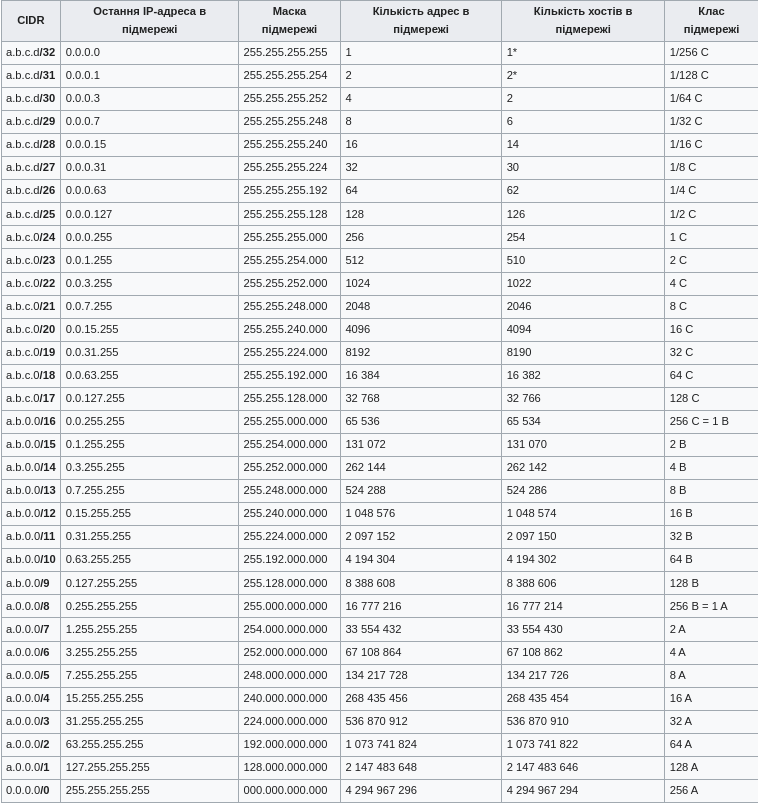
What is a subnet mask?
Subnetting, a critical concept in network management, allows organizations to segment their networks effectively. This division not only optimizes performance but also enhances security practices. By isolating different network segments, organizations can enforce specific security policies tailored to the needs of each subnet.
A subnet mask is a 32-bit number used together with an IP address to determine which part of the IP address refers to the network and which part to the host. The mask consists of a sequence of ones, followed by a sequence of zeros.
Why are subnet masks needed?
By utilizing subnet masks, administrators can determine how many devices can be supported within a network and efficiently allocate resources. For example, a subnet mask of 255.255.255.0 allows for up to 254 devices, making it ideal for small businesses or branch offices that require a straightforward network setup.
- Network segmentation:
- Division of a large network into smaller subnets
- Routing optimization
- Improved network security
- Reduced broadcast traffic
- Effective management:
- Simplified network administration
- Better resource management
- Ability to apply different security policies
Types of subnet masks
- Class-based masks (traditional approach):
- Class A: 255.0.0.0 (/8) – for very large networks
- Class B: 255.255.0.0 (/16) – for medium networks
- Class C: 255.255.255.0 (/24) – for small networks
- Classless addressing (CIDR):
- Allows the use of masks of arbitrary length
- Denoted by “/” after the IP address
- Possible masks from /0 to /32
Practical application of masks
Moreover, subnetting plays a pivotal role in security by limiting broadcast traffic and enhancing data privacy. By creating smaller, controlled environments within a larger network, organizations can monitor and control data flow more effectively.
- Small office networks:
- Typical mask: /24 (255.255.255.0)
- 254 addresses available for devices
- Suitable for most small offices
- Medium networks:
- Masks from /16 to /23
- Allow connection of 512 to 65,534 devices
- Used in large offices and campuses
- Large corporate networks:
- Masks from /8 to /15
- Millions of available addresses
- For large organizations and providers
Ultimately, mastering the nuances of IP addressing, subnetting, and their applications is essential for anyone pursuing a career in IT or network management. Not only does it enhance technical knowledge, but it also prepares professionals to tackle real-world challenges effectively.
- Calculation of available addresses:
- Formula: 2^(32-prefix) – 2
- Subtract 2 addresses (network and broadcast)
- For example, for /24: 2^(32-24) – 2 = 254 addresses
- Subnet planning:
- Considering future growth
- Reserving addresses for special needs
- Routing optimization
Practical Application of IP Addressing
- Routing:
- Determining the path of data transmission
- Optimization of network traffic
- Load balancing
- Security:
- Traffic filtering
- Access control
- Network segmentation
- Network management:
- Device monitoring
- Resource allocation
- Problem diagnostics
As for the practical application of subnetting, consider a large company with multiple departments. By segmenting the network into subnetworks for each department, IT can streamline traffic, ensuring that sensitive data from HR, for example, doesn’t unintentionally cross over into the Marketing subnet.
The use of subnet masks is not just a technicality; it directly impacts how efficiently a network operates. For instance, a college campus may utilize Class A subnetting to accommodate thousands of devices, allowing for a diverse range of applications, from academic resources to student activities.
Understanding practical applications is vital. For instance, in cloud computing environments, proper IP address management ensures that resources are allocated efficiently, optimizing both speed and operational costs. Additionally, with the rise of remote work, organizations need to ensure secure and efficient access to their networks.
Real-world examples of misconfigured IP addresses leading to security breaches highlight the significance of understanding and implementing proper addressing protocols. Organizations must prioritize training and continuous education in IP management for their IT staff to mitigate potential risks.
The growing landscape of IoT devices also stresses the importance of effective IP address allocation. Each IoT device, from smart thermostats to security cameras, requires a unique IP address to communicate. IPv6 accommodates this growth, underscoring the critical transition from IPv4 as our interconnected world continues to evolve.